A Longer Visitor Season Can Create a Longer Employment Season
Growing the shoulder season can do more than fill rooms.
It can make seasonal tourism businesses healthier places to work.
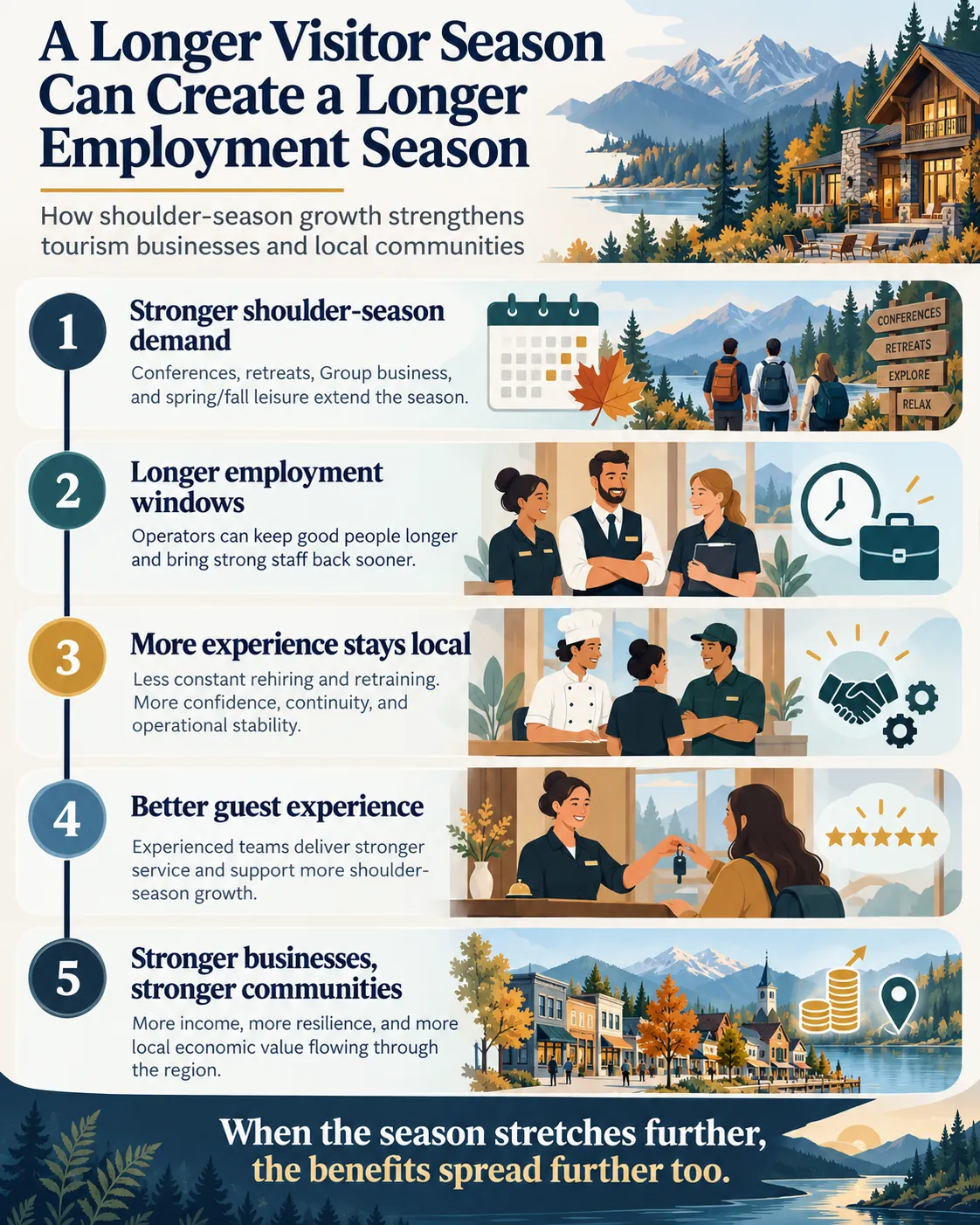
When demand stretches further into fall and returns earlier in spring, operators have more reason to keep good people longer, bring them back sooner and create positions that extend beyond the traditional summer rush.
That matters because one of the hardest parts of seasonal tourism is rebuilding the workforce over and over again.
Every spring, operators hire, onboard and train. Teams learn the property, the systems, the guests and each other. By the time the high season is in full swing, many are finally hitting their stride.
Then August arrives, students head back to school, seasonal contracts end and much of that experience walks out the door with them. Yes, that investment might return next season, but there’s a good chance it won’t.
A stronger shoulder season can start to change that equation.
More conferences, retreats, Group business and fall leisure demand can give operators the confidence to extend employment further into the year. Stronger spring business can justify bringing people back earlier. Some seasonal roles may even become longer-term or year-round positions.
That creates value beyond the bookings themselves.
Operators retain more experience and spend less time rebuilding teams from scratch. Returning staff already know the property and the expectations. Guests are served by people who are more confident in their roles. And the business is better positioned to take on more shoulder-season demand without constantly starting over.
There will always be natural peaks and valleys in seasonal tourism. Summer will still require more people than October, and winter destinations will have their own staffing rhythms. But stronger shoulder seasons can smooth some of those extremes and give operators more room to plan beyond the next rush.
We often talk about extending the season in terms of occupancy, visitor spending and economic impact.
The employment side matters too.
A longer visitor season can mean longer stretches of work, more predictable income and a better chance for people to build a life in the communities where they work.
And when more of that income, experience and stability stays local, the benefits spread well beyond the property itself.
Stronger tourism businesses help create stronger local economies.
And stronger local economies help create stronger communities.
Ready to support the sector that supports us all?
#GetRoaming and let’s build a more connected, resilient, and thriving Canada, one traveller, one town, one story at a time.
Yours in tourism, innovation and startups,

Founder and CEO, Roamlii